Quick answer
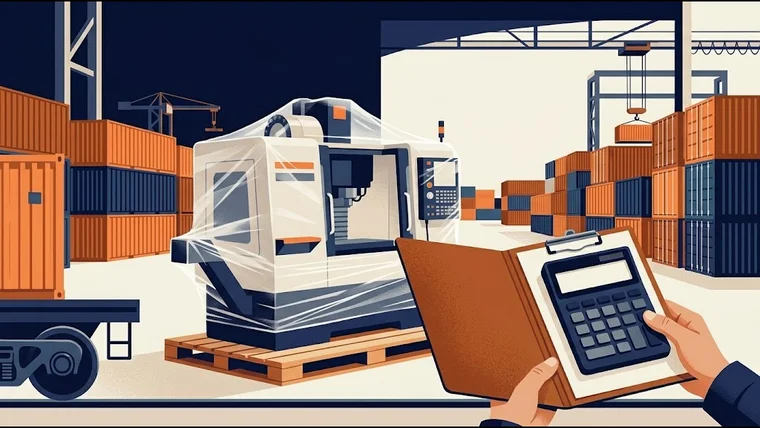
To import equipment from China to Ecuador: define the equipment precisely (including 120 V, 60 Hz power), check permits and the tariff code, vet the manufacturer, negotiate FOB, pay part upfront and the rest after inspection, ship by sea and clear customs with a RUC, Ecuapass registration and an electronic signature.
Buying equipment directly from the manufacturer in China can be much cheaper than buying from a local distributor. But there are steps that end up costing you if you skip them. Here's how it's done, in order.
1. Define exactly what you need
Before looking for a supplier, be clear about the model, capacity, spare parts and consumables. A detail many people forget: in Ecuador the power supply is 120 volts and 60 Hz, and many Chinese machines come for 220 volts and 50 Hz. You have to order it configured for Ecuador.
2. Check whether you need permits before buying
Every product has a tariff code, which determines how much duty you pay and whether it needs prior permits. Some equipment, such as medical or laboratory devices, may require registrations with other agencies before it can enter. This is checked before you pay, not when the equipment is already at the port.
3. Find and vet the supplier
- Confirm it is a manufacturer and not just a middleman.
- Ask for a video call at the factory and photos of the actual equipment, not catalogue shots.
- Ask for references from other customers and check how many years it has been selling.
- Compare at least three quotes for the same equipment.
4. Negotiate the price and who pays for what
Besides the price, you need to agree on where the seller's responsibility ends. The most common option is to buy FOB: the manufacturer loads the equipment on the ship in China, and from there freight, insurance and customs are on you. That way you compare prices on equal terms.
5. Pay safely
The usual approach is to pay part upfront, often 30%, and the rest when the equipment is ready and checked, before shipping. Never pay 100% upfront to a supplier you don't know, and always pay into an account in the name of the company you signed with.
6. Inspect before shipping
Before the final payment, someone has to see the equipment working: an inspection company, a trusted person or, at the very least, a full test video. Once the equipment leaves China, making a claim becomes very difficult.
7. Shipping
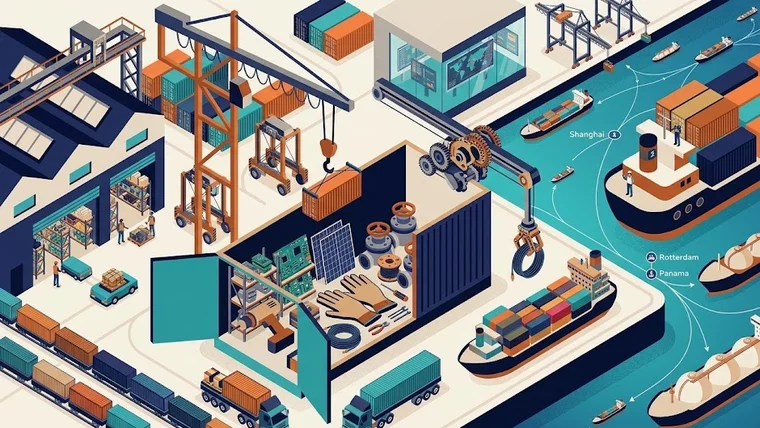
Large equipment travels by sea, in its own container or sharing one with other cargo. The trip from China to Guayaquil usually takes several weeks, plus customs time. Small, urgent equipment can go by air, but freight costs a lot more.
8. Customs in Ecuador
To import you need a RUC (tax ID), to be registered as an importer in the customs authority's (SENAE) Ecuapass system, and an electronic signature. The law doesn't require you to hire a customs broker, but SENAE itself recommends it and in practice almost every importer works with one. When clearing the goods you pay the taxes: the tariff for your product code, the 0.5% FODINFA levy and 15% VAT.
9. Delivery, installation and warranty
Once cleared, the equipment goes from the port to your business. Before closing the deal, get in writing from the manufacturer how the warranty works, how spare parts are shipped and whether they give remote technical support. That's what you miss most when the equipment breaks down.
Frequently asked questions
Do I need a RUC to import into Ecuador?
Yes. To import you need a RUC, registration as an importer in Ecuapass and an electronic signature.
Is a customs broker mandatory?
The law doesn't require it, but SENAE recommends it and in practice almost every importer works with one.
How much tax do you pay when importing?
The tariff for your product code, the 0.5% FODINFA levy and 15% VAT, calculated on the CIF value.
Sources
Updated on 15 October 2026.

About the author
Giovanni Guadalupe
Consultant in digital marketing, imports from China and studying in Russia and China. I took my degree in Moscow, a master's in Minsk and another in Barcelona, and I speak Spanish, English and Russian.